
.avif)
User Research: How to Integrate It Into Your Organization
User research or UX research is a form of research into the user's experience. User research is a
.webp)
How many features have you launched because "everyone else is doing it" or because "it looked cool in the mock-up"? And how many have actually had an impact on your revenue?
User Research is the antidote to assumptions. It is a scientific approach that involves understanding the motivations, behaviors, and frustrations of your users in order to design products that they will really want to use. It's not magic, it's empathy structured by data.
In this guide, we break down the user research methods we use at Welyft to turn "opinions" into action plans.
Why is UX Research important?
Investing in user research reduces the risk of product failure. Specifically, it allows you to:
- Reduce development costs: It costs 100 times less to correct an error on a prototype than to recode a feature in production.
- Increase adoption: By solving real problems (pain points), you create immediate perceived value.
- Defuse internal conflicts: User data (verbatim, video) puts an end to subjective debates in meetings.
What is the difference between User Research and CRO?
There is often confusion. CRO (Conversion Rate Optimization) and User Research both aim to improve performance, but from different angles.
The CRO (The What and the Where)
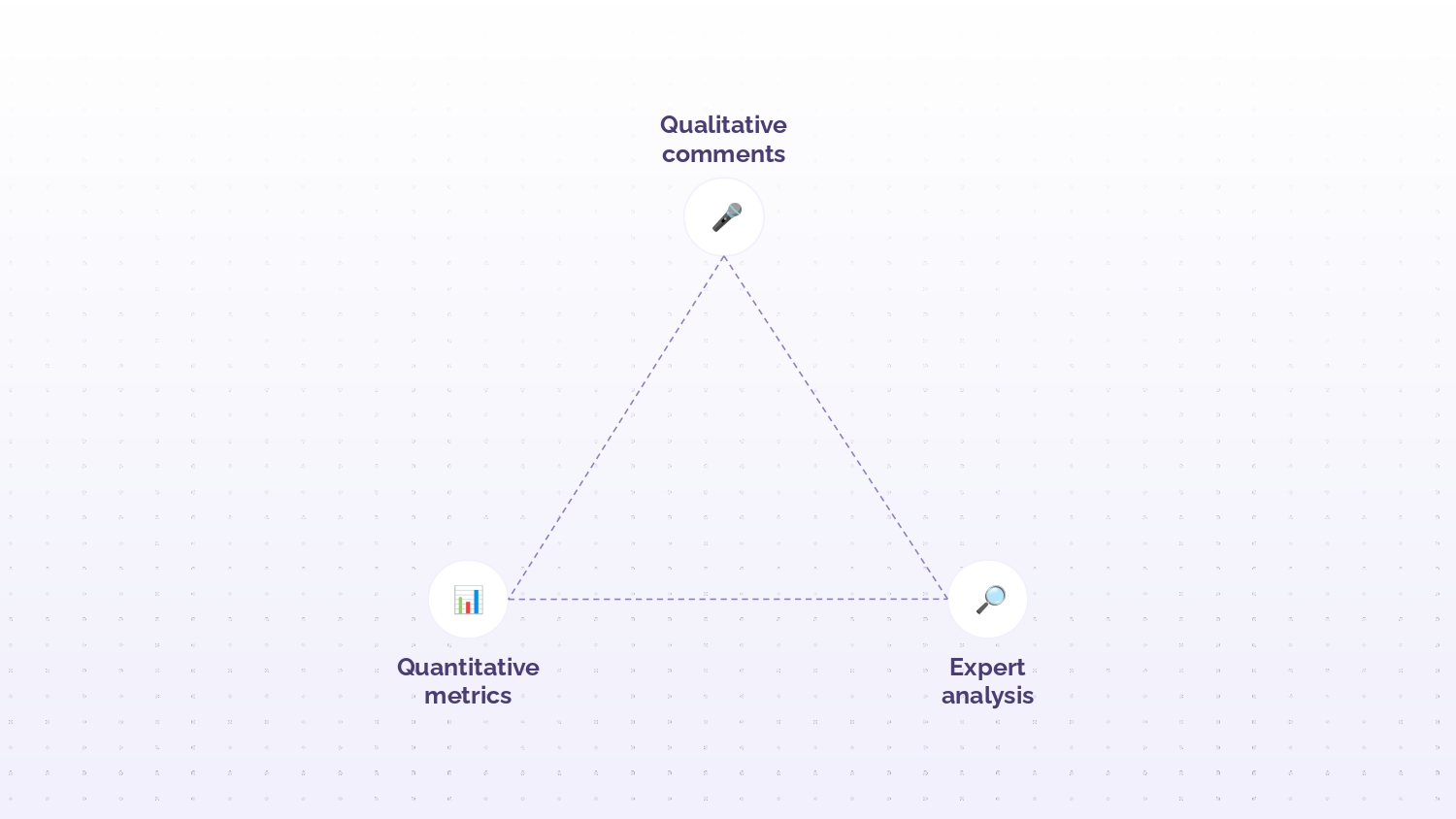
He uses quantitative data (analytics, A/B testing) to identify performance issues.
Example: "The conversion rate drops by 20% on the Shopping Cart page."
User Research (The Why)
It uses qualitative data to explain the root causes.
Example: "Users abandon their shopping carts because they cannot find information about return shipping costs."
The two disciplines are inseparable: CRO tells you where to look, User Research tells you what to fix. It is this synergy that we apply in ourCRO agency assignments.
How to conduct UX research?
You don't need a laboratory to get started. Here are three accessible methods for initiating a research project.
1. Moderated User Tests (The Gold Standard)
Nothing can replace direct observation. The principle: recruit 5 to 8 users who are representative of your target audience and ask them to perform specific tasks on your site (e.g., "Find a Mother's Day gift with a budget of $50").
What you will discover:
- Invisible usability bugs.
- Misunderstandings of wording.
- The differences between the imagined journey and the actual journey.
2. Feedback analysis (VoC - Voice of Customer)
Your users are already talking to you, you just need to listen.
- NPS (Net Promoter Score): To measure overall loyalty.
- CSAT (Customer Satisfaction): To evaluate a specific interaction (e.g., after a chat with support).
- CES (Customer Effort Score): Crucial in UX. "Did you find it easy to perform this action?" If the effort is high, the friction is critical.
Expert tip: Don't just look at the rating, read the verbatim comments. That's where you'll find the gems.
3. Behavioral Audit (Heatmaps & Session Recording)
Sometimes what users say differs from what they do. Tools such as Hotjar or ContentSquare allow you to see the reality without any filters.
- Heatmaps: To see if your CTAs are being seen and clicked on.
- Session Replay: To detect "Rage Clicks" (frustrated clicks on a non-clickable element).
Integration into Design Thinking
User research is not an isolated step; it is the driving force behind the design process, often illustrated by the "Double Diamond" model.

It is used in the first phase (Divergence/Discovery) to open up the field of possibilities, and in the testing phase (Convergence) to validate the solution before development.
Empathy is a competitive advantage
In a saturated digital world, the winners are those who understand their customers best. User Research allows us to move from a "product-centric" culture (here are our features) to a "user-centric" culture (here's how we solve your problems).
Want to launch your first user tests but don't have the time or know-how to recruit the right profiles?
👉 Discover our User Research support services and let our experts conduct the research for you.


_page-0001.jpg)

_page-0001.jpg)
_page-0001.jpg)
.png)

.png)


.png)
.png)
.png)
.svg)
