


Launching a few A/B tests is within reach of any marketing team. However, building a sustainable experimentation program capable of generating growth year after year is a far more complex challenge. Companies often hit a plateau: marginal gains decrease and the ""testing culture"" struggles to take root beyond the CRO team.
This is where the maturity audit comes in. At Welyft, we don't just analyze your tools. We assess your organizational capacity to turn data into business decisions. This methodology enables a shift from a tactical practice (running tests) to a strategic vision (being an experimentation company).
What methodology for assessing CRO maturity?
For a Conversion Rate Optimization (CRO) strategy to be effective, it must be systemic. Welyft, as a CRO agency, has modeled an audit approach that scans your entire value chain: from data collection to decision-making at the executive committee level.
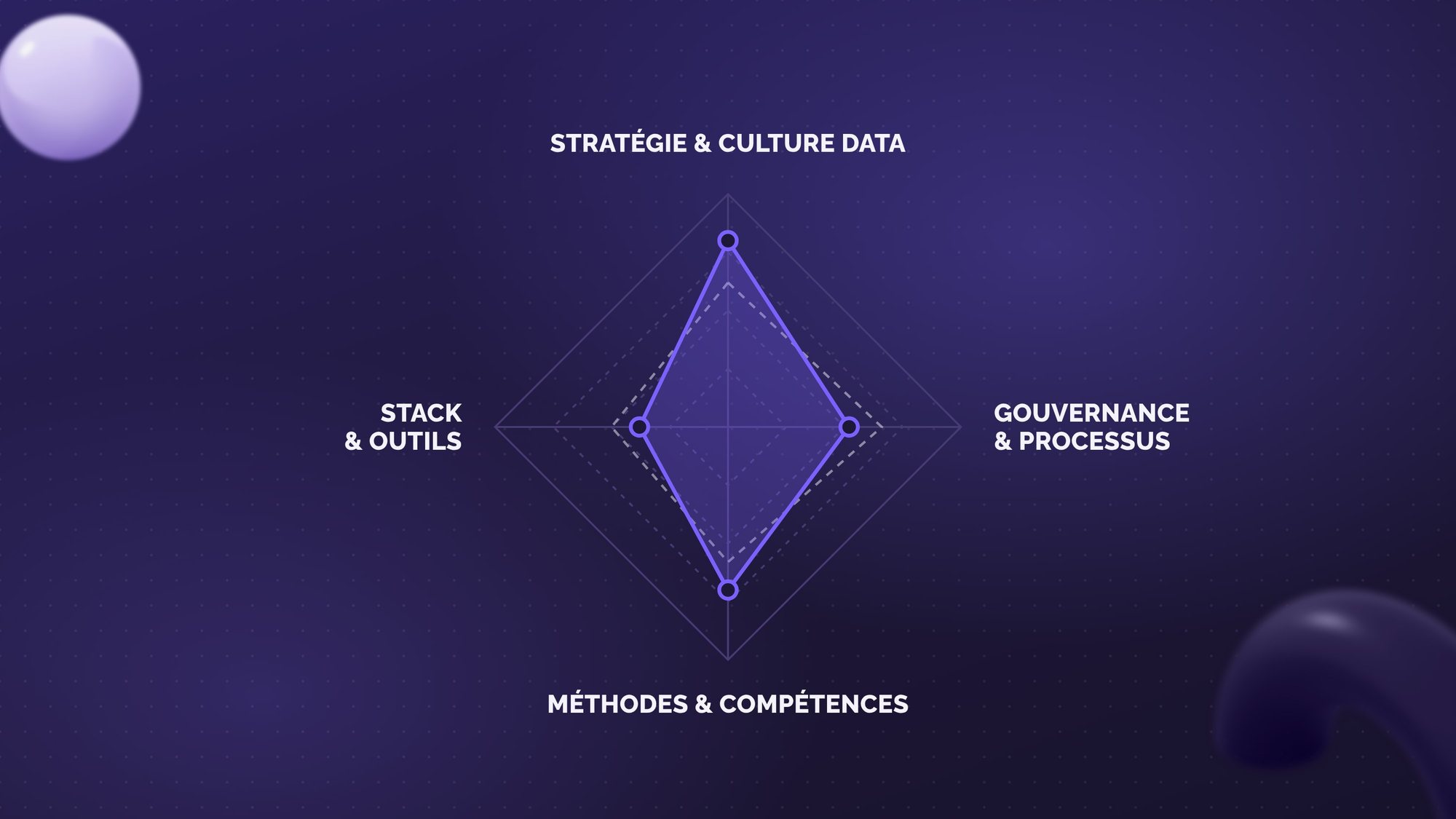
The 4 pillars of experimentation performance
Our maturity audit deconstructs your organization along four critical axes. A weakness in any one of these pillars is often enough to jam the entire conversion machine.
1. Strategy & Data Culture
This is the foundation. We check whether experimentation is supported by the C-Level or remains an isolated initiative.
- Sponsorship: Does management allocate budget and time to risky hypotheses?
- Data-Driven vs HiPPO: Are decisions made based on solid data or according to the opinion of the highest paid person (Highest Paid Person's Opinion)?
- Culture of failure: Does the company value ""losing tests"" as learning opportunities?
2. Governance & Processes
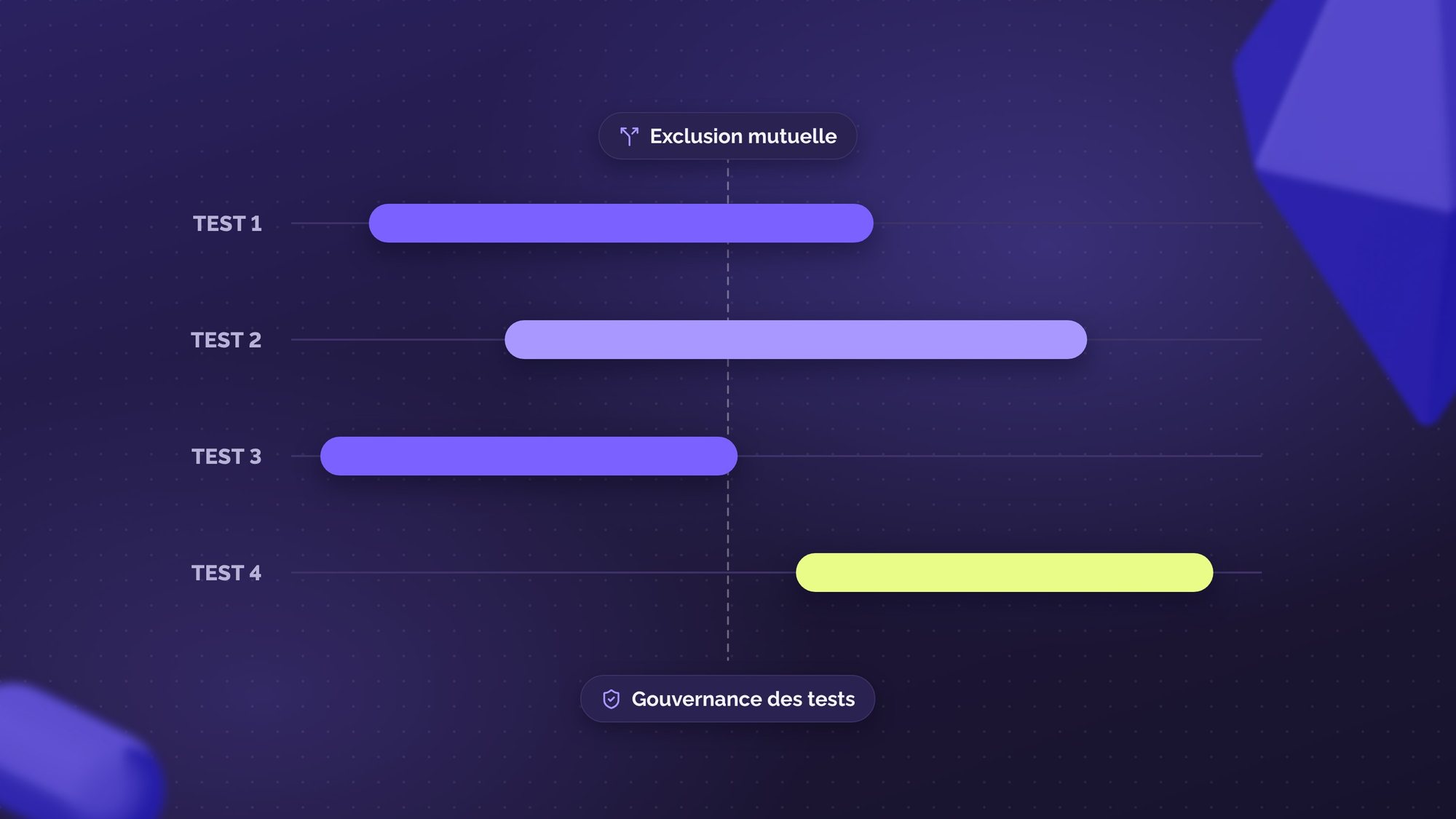
Without processes, A/B testing becomes chaotic. We analyze how your teams are organized to streamline test velocity.
- RACI Matrix: Who validates hypotheses? Who develops? Who analyzes? Roles must be clear to avoid bottlenecks.
- Fluidity: Are there frictions between the Marketing, Product, and Tech teams?
3. Methods & Skills
Having the right tools is not enough if the methodology is flawed. This pillar assesses the scientific rigor of your teams.
- Quality of hypotheses: Do your tests address real user problems or mere intuitions?
- Statistical reliability: Are concepts such as significance, statistical power and sample size well understood?
- User Research: The use of qualitative data (interviews, heatmaps) to feed the roadmap.
4. Technology Stack & Tools
The audit verifies how well your technical stack matches your ambitions.
- Tool consistency: Integration between your A/B testing solution (AB Tasty, Kameleoon...), your analytics tools (GA4, Piano) and your CRM.
- Knowledge management: Use of tools such as Jira or Airtable to archive learnings and avoid testing the same thing twice.
How does a CRO maturity audit work?
The maturity audit is not an end in itself, it is a transformation tool. Our iterative process unfolds in 5 key steps to guarantee an immediate impact.
- Immersion and listening: We conduct cross-interviews with your teams (Developers, UX Designers, Product Owners, Marketers) to understand current frustrations and blockers.
- Defining the target vision: Where do you want to be in 12 months? Together we define an MVP (Minimum Viable Process) to achieve quick results (Quick Wins).
- Gap analysis: We compare your current situation with your ambitions to identify gaps in resources, skills or tools.
- Maturity scoring: We assess your company on 10 key factors (testing speed, data quality, roadmap alignment, etc.).
- Reporting and action plan: You receive a prioritized roadmap, distinguishing urgent initiatives from long-term structural changes.
Where do you stand?
At the end of the audit, we position your organization on a precise scale. This allows you to set realistic objectives.
- Beginner (Level 1): Sporadic tests, often launched ""by gut feeling"". No documented process. The goal is to get the machine running.
- Essential (Level 2): First successes recorded. Management starts taking an interest in the topic. The challenge is to structure the approach to avoid running out of steam.
- Expertise (Level 3): Data drives most decisions. Experimentation is integrated into product sprints. The goal is industrialization.
- Excellence (Level 4): Experimentation is part of the company's DNA (as at Booking or Amazon). Teams are autonomous and decentralized.
Example of key recommendations
During our audits, we regularly identify three obstacles preventing ROI from taking off:
- Organizational silos: Marketing wants to test, but tech has no bandwidth.
Welyft Solution: Creation of dedicated ""Squat Teams"" or implementation of agile processes specific to CRO. - The ""Vanity Metric"": Focusing on KPIs that flatter the ego (clicks) rather than the business (margin, retention).
Welyft Solution: Redefinition of KPIs and alignment with the company's OKRs. - Lack of archiving: Teams repeat the same mistakes because past tests are not documented.
Welyft Solution: Implementation of a shared ""Knowledge Center"".
Move from intuition to science
A CRO maturity audit is not just a technical check. It is the starting point of a cultural transformation that places the customer and data at the heart of your strategic decisions. By structuring your approach, you don't just test button colors: you minimize business risks and maximize the profitability of every euro invested.
Is your experimentation program stagnating? It's time to move up a gear. Discover how our experts can support you through our A/B testing training offer or request your pre-audit today.