

This opinion piece comes from our newsletter WETALK every month, get the best insights to optimise your website's experience and performance!
Wait what?!
We're normally here among experts, but just in case, CRO is the acronym for Conversion Rate Optimization.
The goal of CRO is to maximize the conversion rate of a website or application.
With a mechanism that seems simple at first glance:
Understand → Seek to identify pain points and irritants
Build → Seek to build improvement hypotheses
- Managing the optimization roadmap
- Designing marketing activations
- Wireframe, design and HTML
Activate / Validate → Seek to validate business impact
- Deployment and management of activations
- A/B test
- Personalization
- Statistical analysis of results
- Generalization recommendation
In France, a few players entered this fast-moving market in the 2010s, such as:
AB Tasty - A leading tool in A/B testing, launched in 2009 (first an agency before becoming the tool we know today.)
Kameleoon - Its main French competitor, launched in 2012
And pioneering agencies specialized in these data and CRO topics, such as Uptilab (where my partners Amaury and Léo and I come from).
So no, CRO is not new in France, but in my opinion, we already need to take a step back from this acronym, which gives the impression that conversion rate is the be-all and end-all of user experience.
I won't go into the confusion here between CRO - Chief Revenue Officer, and CRO - Conversion Rate Optimization, but all recruiters will see this as good news: no longer having to call Conversion Rate Optimization, CRO
(I promise you it can take a very long time to find a profile, there are so many names for our jobs...)
So, why stop talking about “CRO”?
“The CRO acronym no longer reflects the reality of our job and, above all, is very reductive regarding our understanding of visitors' real needs”
- Amaury Ortolland, Co-founder @ Welyft
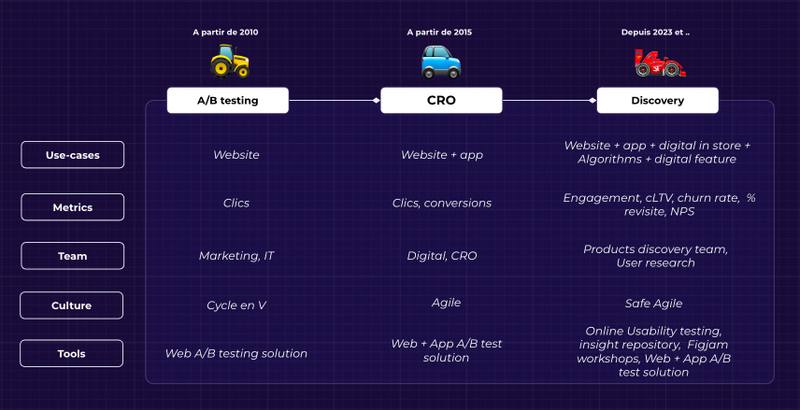
The very essence of the job:
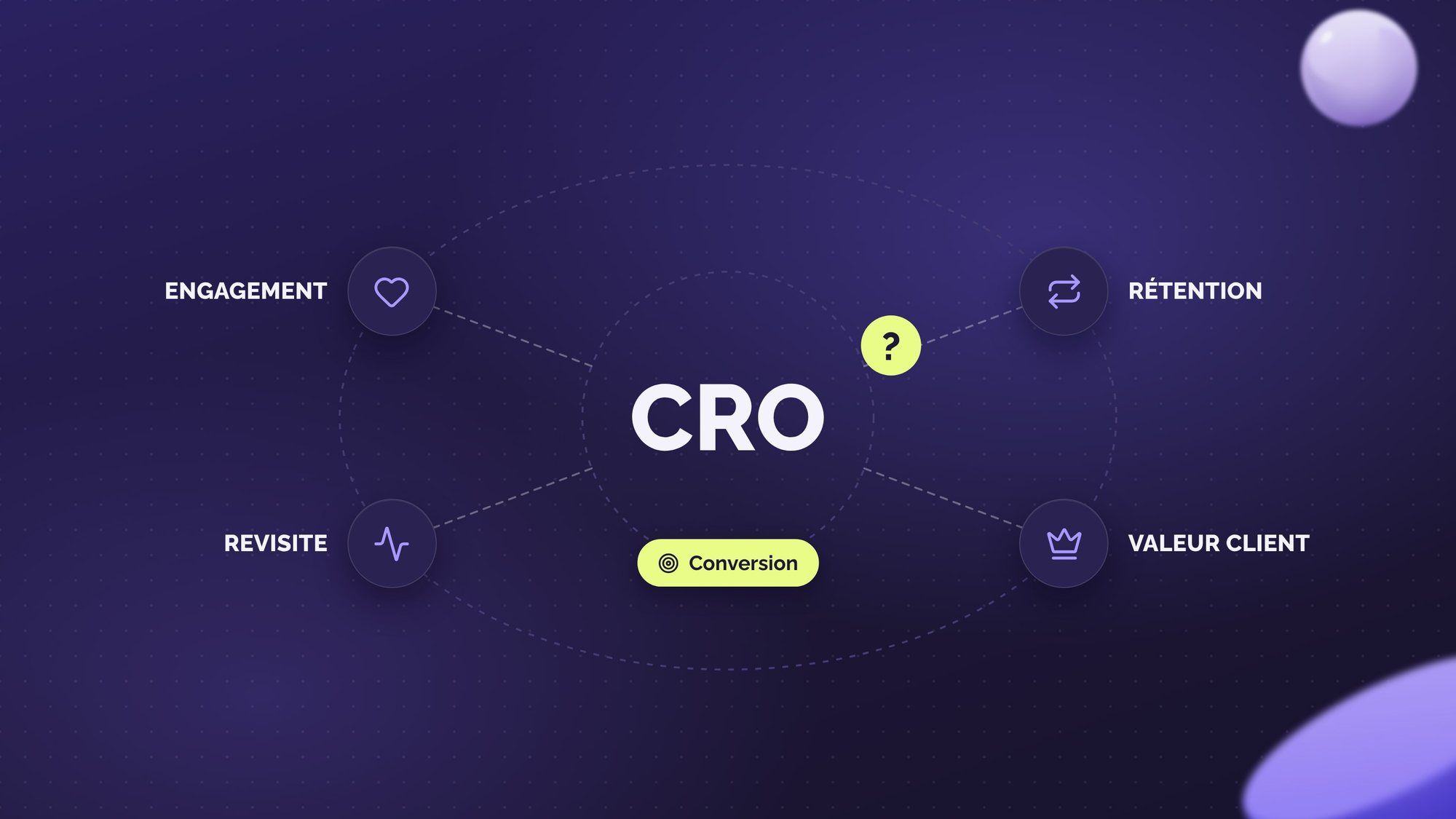
In reality, the profession as we knew it has evolved significantly, broadening to encompass not only conversion, but also engagement, retention and customer loyalty. It's no longer just about converting users into customers, but also about optimizing the entire customer journey.
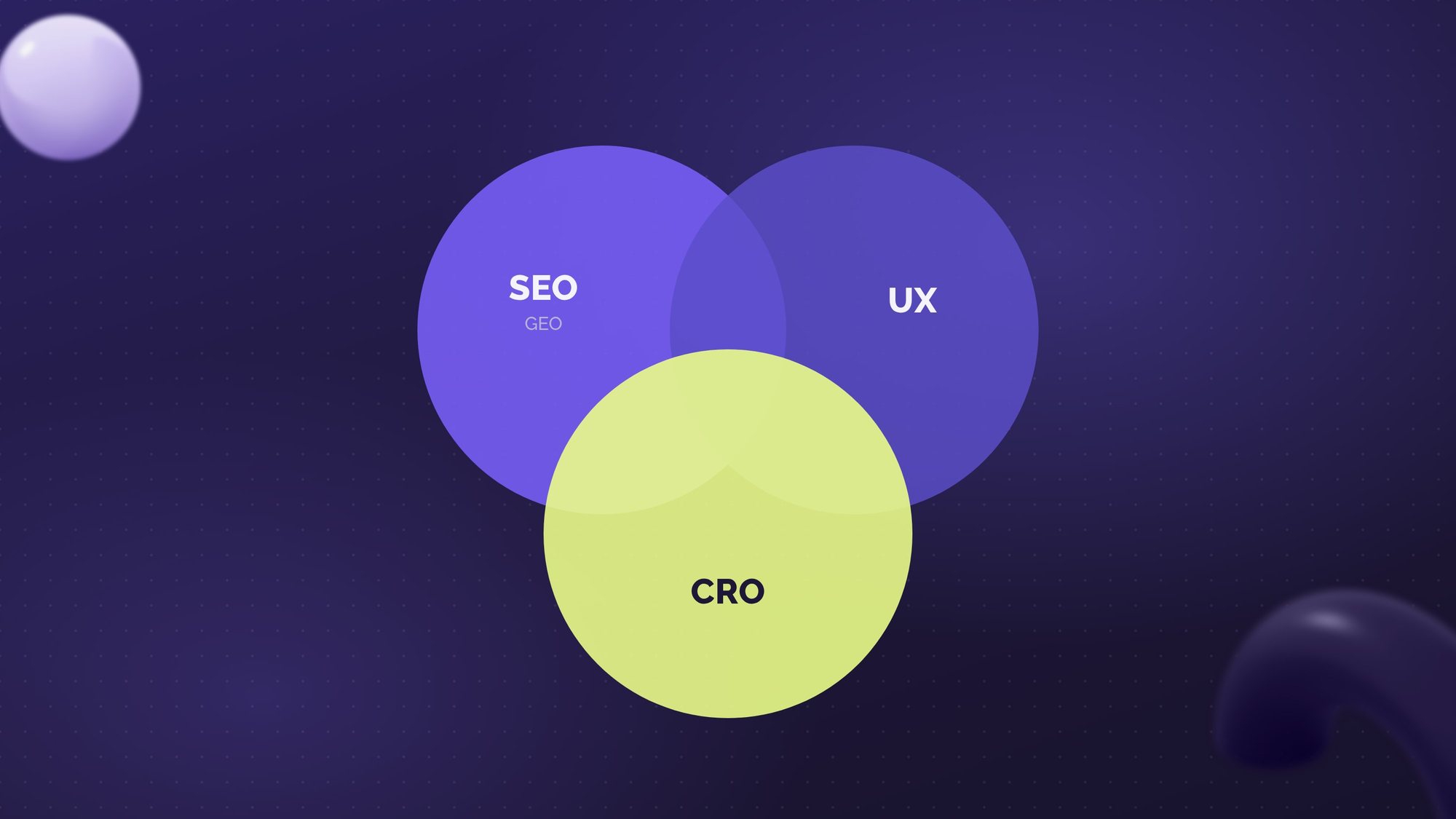
Beyond simple conversion, the organization must become increasingly cross-functional. Solutions are adapting, for instance, to cover broader aspects such as personalizing the user experience.
The CJO:
It was based on this observation that, at the beginning of the Welyft adventure, we coined the acronym “CJO” for Customer Journey Optimization.
We were convinced that by taking this broader perspective, it would be possible to unlock new horizons for growth, at a time when, more than ever, users want to be treated as individuals.
We wanted to simplify and make accessible the deployment of omnichannel and individualized user journeys.
Unfortunately, as the most attentive among you may have noticed, we're pushing this approach less, because silos between teams are now too significant.
We believe in the vision, but execution takes longer to put in place.
Product discovery:
Stemming from product-mode organization and design thinking, the discovery phase is the one that comes before the delivery phase.
The discovery phase consists of discovering what needs to be built, while the delivery phase consists of producing the solution that was found.
The main steps of this approach involve convergence and divergence between users' problems and the solutions to be implemented.
The toolbox for experimenting and triangulating insights is broader than the one typically used by CRO teams (ideation workshops, UX best practices, user tests, A/B tests, card sorting, interviews, guerrilla testing, insight repository).
Unlike the CRO approach, which is often a roadmap independent from the IT teams' work, product discovery fits perfectly into the site or application's development roadmap, so that 100% of the hypotheses tested and “derisked” will have an impact on the journeys developed by the dev teams.
The discovery method can adapt to any type of organization if it has management “sponsorship” in order to align stakeholders on specific routines and train CRO teams, particularly in qualitative user research approaches.
Conclusion:
It will be difficult to change practices overnight; some approaches, such as product-mode organization, are starting to naturally shift things with product discovery, but we need to go further and progressively move the lines.
Our jobs can no longer just focus on the uplift from A/B tests and the gains that could result from them. We need to embrace experimentation in the broadest sense and help organizations test, iterate and evolve, always with the user at the center.
The world's biggest brands (AirBnB…) have understood this. It's work that is done over the long term, with gains that are also built over the long term.
So, what if we now did?
XO: Experience Optimization
DEO: Data Experience Optimization
EXO: Experiment Optimization
Just putting this out there
Want to learn more? Discover our CRO offers.