


Experimentation is the engine of growth, but like any engine, it can overheat. At Welyft, we often observe a paradox: by trying to test everything simultaneously without strict governance, companies end up degrading the very experience they are trying to improve. An excessive multiplication of tests, often called "Test Bloat", leads to immediate technical and business consequences.
1. Are your tests degrading latency and Core Web Vitals?
This is the most common issue. Most A/B testing tools (client-side) inject JavaScript to modify the browser's DOM. Each active test adds additional computational load.
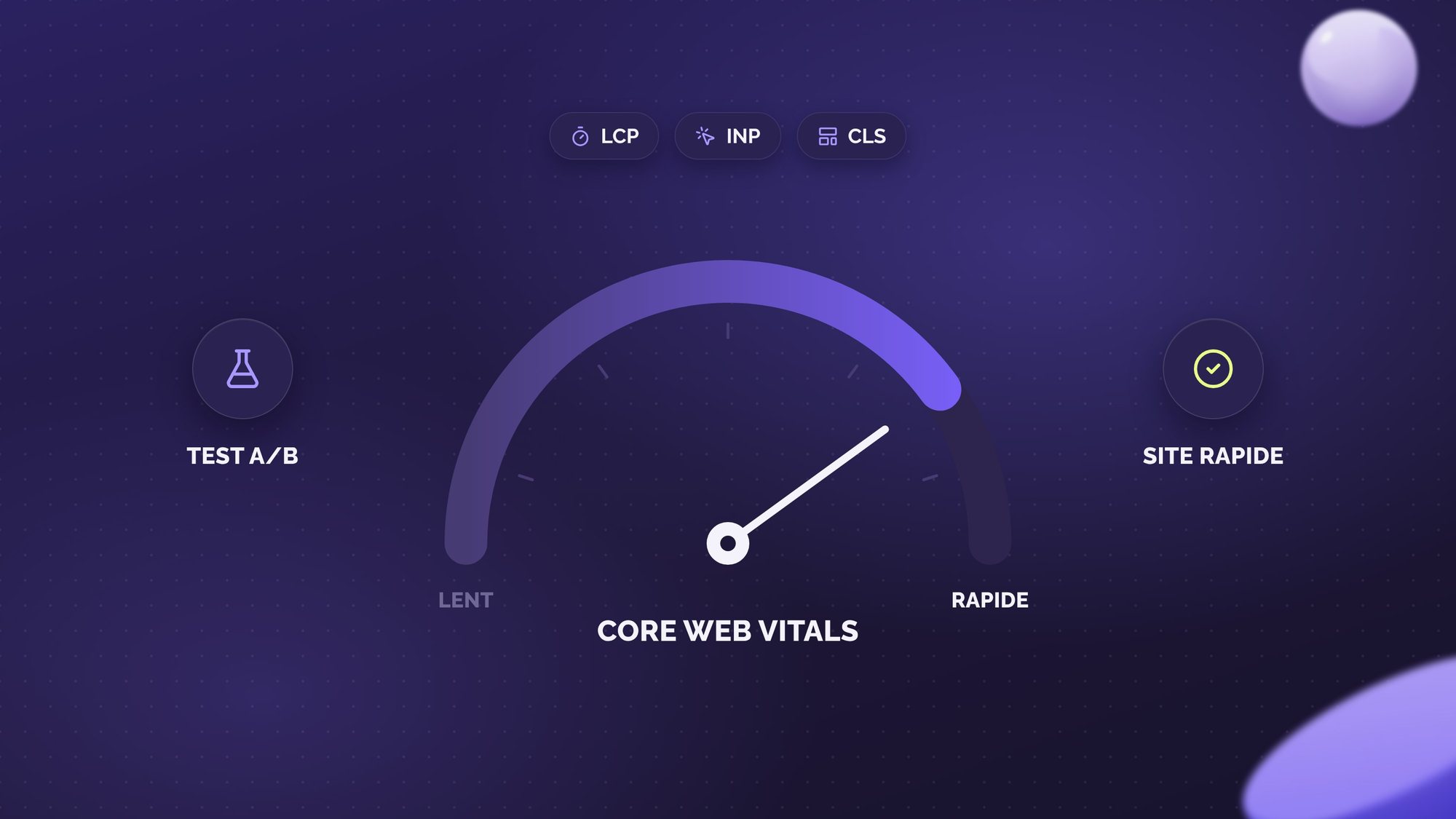
If you accumulate 10 or 20 scripts on the same page, you directly impact your Core Web Vitals, indicators that are now crucial for your Google ranking (SEO):
- LCP (Largest Contentful Paint): The display time of the main element increases because the browser must execute the test scripts before displaying the page.
- CLS (Cumulative Layout Shift): This is the "flicker" effect. The original page displays for a fraction of a second before being replaced by the variant, creating visual instability that is very frustrating for the user.
- INP (Interaction to Next Paint): An overload of JavaScript can delay the site's responsiveness to user clicks.
2. How do you avoid collisions and data pollution?
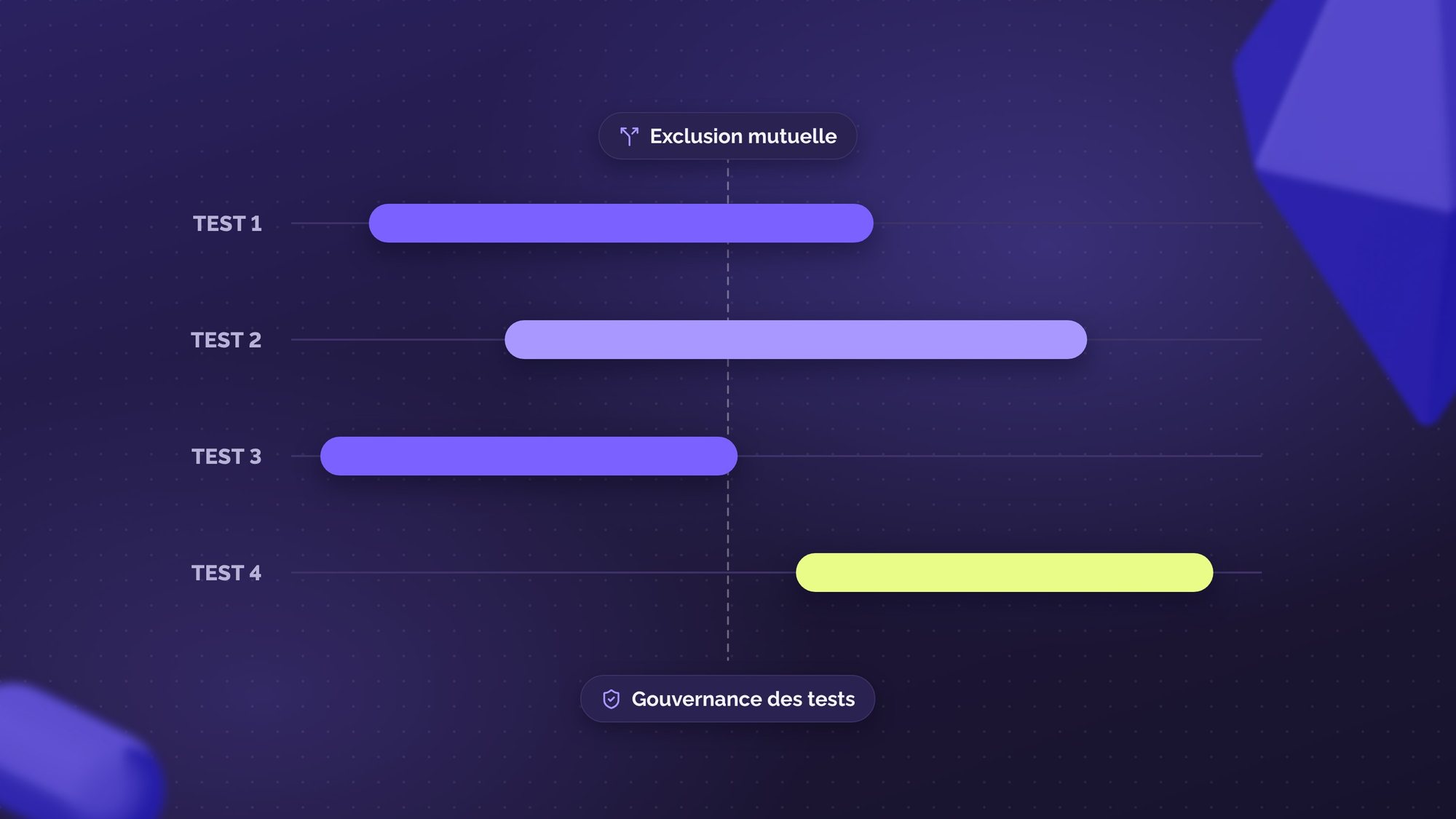
Launching tests without an exclusion matrix means navigating blindly. Imagine a test on the color of the "Add to cart" button and another test displaying a promotional banner that hides this same button on mobile.
This type of interaction creates major statistical biases. You will never know whether variation B won because of its design or because of the unforeseen interaction with another test. Your data becomes unusable, and your business decisions risky.
3. Are you accumulating invisible technical debt?
The more campaigns you multiply, the more complex management becomes. A poorly maintained A/B testing account becomes a graveyard of "forgotten" tests: scripts that are still running in the background even though the test ended months ago. This consumes resources unnecessarily and complicates the work of your developers during site updates.
What are Welyft's Best Practices for a healthy roadmap?
To maintain a high level of experimentation without sacrificing performance, we recommend strict hygiene for your CRO roadmap.
1. Industrialization: how do you move from test to hard code?
Your A/B testing tool is a prototyping and decision-making tool, not a CMS. Once a variant is declared the winner with sufficient statistical significance:
- Stop the test in the tool.
- Send the specifications to your technical team.
- Integrate the change via "hard code" directly into the site's source code.
This discipline helps keep a site lightweight and fast. Need help prioritizing? Our CRO agency can help you structure this process.
2. How to prioritize by impact (Quality > Quantity)?
It's tempting to test every button color, but the real ROI lies elsewhere. Use prioritization frameworks like PIE (Potential, Importance, Ease) or ICE to sort your hypotheses.
It's better to launch 3 strategic tests on the checkout funnel than 15 cosmetic tests on low-traffic pages. Focus your energy where the money is.
3. Why are segmentation and mutual exclusion key?
To avoid conflicts, segment your audiences. If you absolutely need to test two elements on the same page, make sure the same user cannot be exposed to both experiences simultaneously (unless you're running a controlled multivariate test - MVT).
Expert tip: Group your tests by type. A wording change can often be deployed globally, while a structural UX change will require more caution and segmentation.
How to optimize the experience without slowing down the site?
A/B testing should never come at the expense of the overall user experience. A slow site will always convert less well, even with the best design variant. The balance lies in rigorous governance and close collaboration between Marketing and Tech teams.
Suspect that your tools are slowing down your site? It might be time for a performance and maturity audit. Contact our Data & Analytics experts to clean up your situation.